

Behind the scenes: filming the St Ferrer Impact Build, a whole home renovated in one day
How we filmed and photographed the St Ferrer Impact Build: interviews in the house before the build, more than 80 people on site for eleven and a half hours, and the reveal at the end of the day.
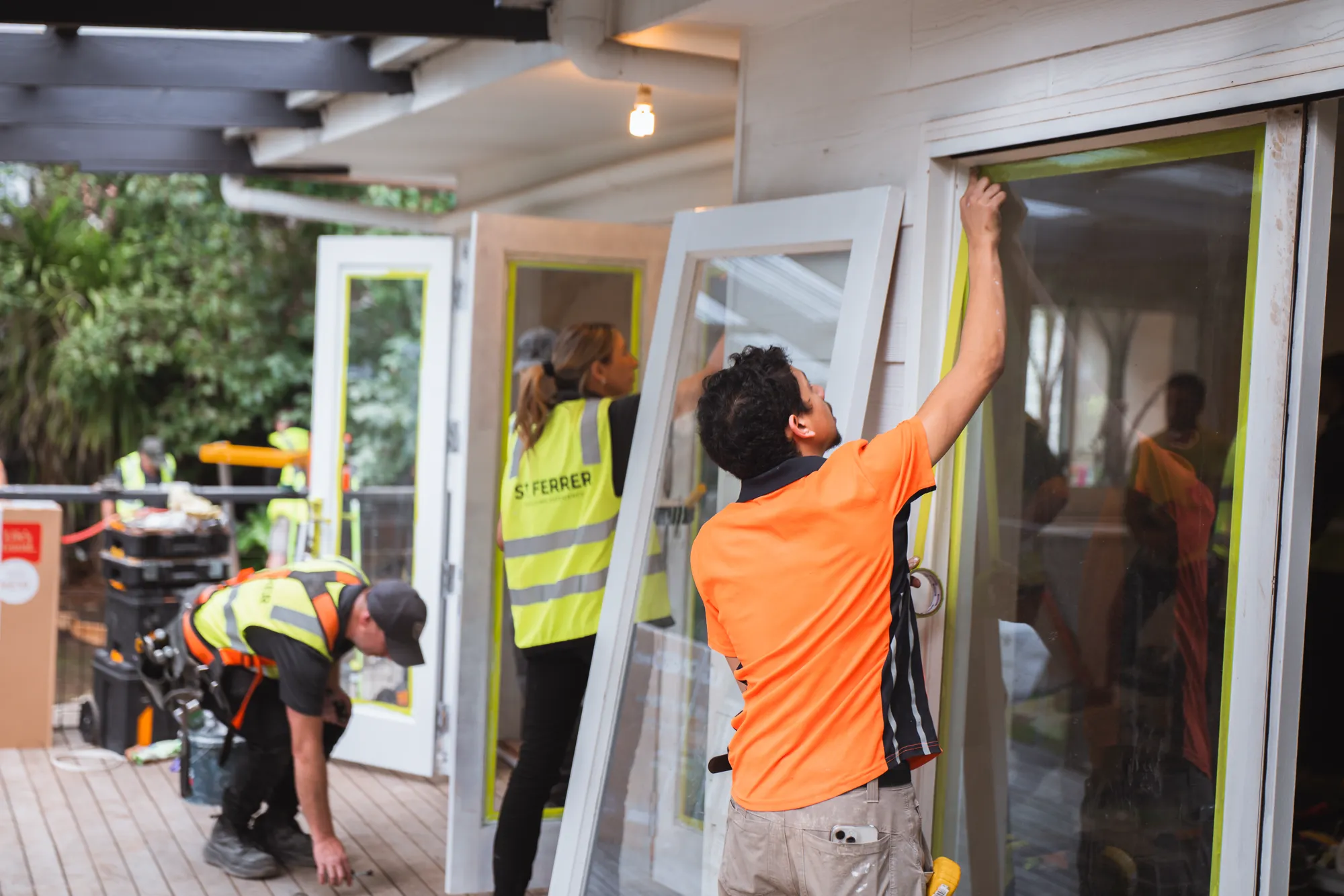
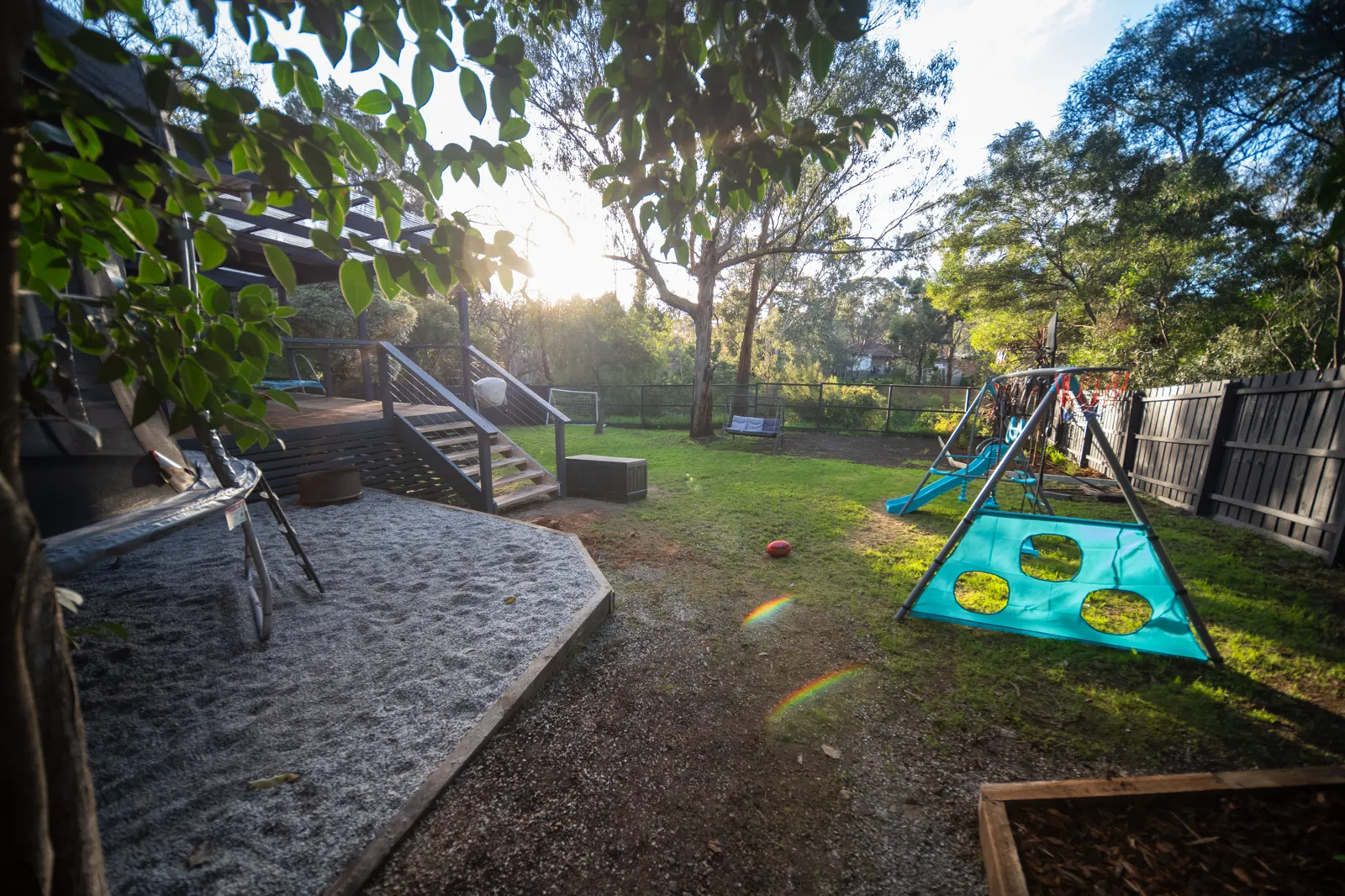
On Friday 21 August, St Ferrer Building Contractors and 40 Impact Partners renovated an entire Melbourne family home in a single day. Bedrooms, bathrooms, a new kitchen, heating and cooling, a re-levelled floor, fresh paint inside and out, and a completely relandscaped backyard. More than 80 trades, suppliers and volunteers on site, from a 6am arrival to a 5:15pm reveal.
St Ferrer asked us to capture it. We produced the documentary and the photography, and this is a look at how the project came together from our side of the camera. The full film is below, and the finished work lives in the St Ferrer Impact Build case study.
A build day film needs a story before the build
A renovation in a day is a spectacle, and spectacle on its own makes a good reel, not a good film. What makes people stay for six minutes is knowing whose house it is and why it matters. So the documentary starts well before anyone picks up a tool.
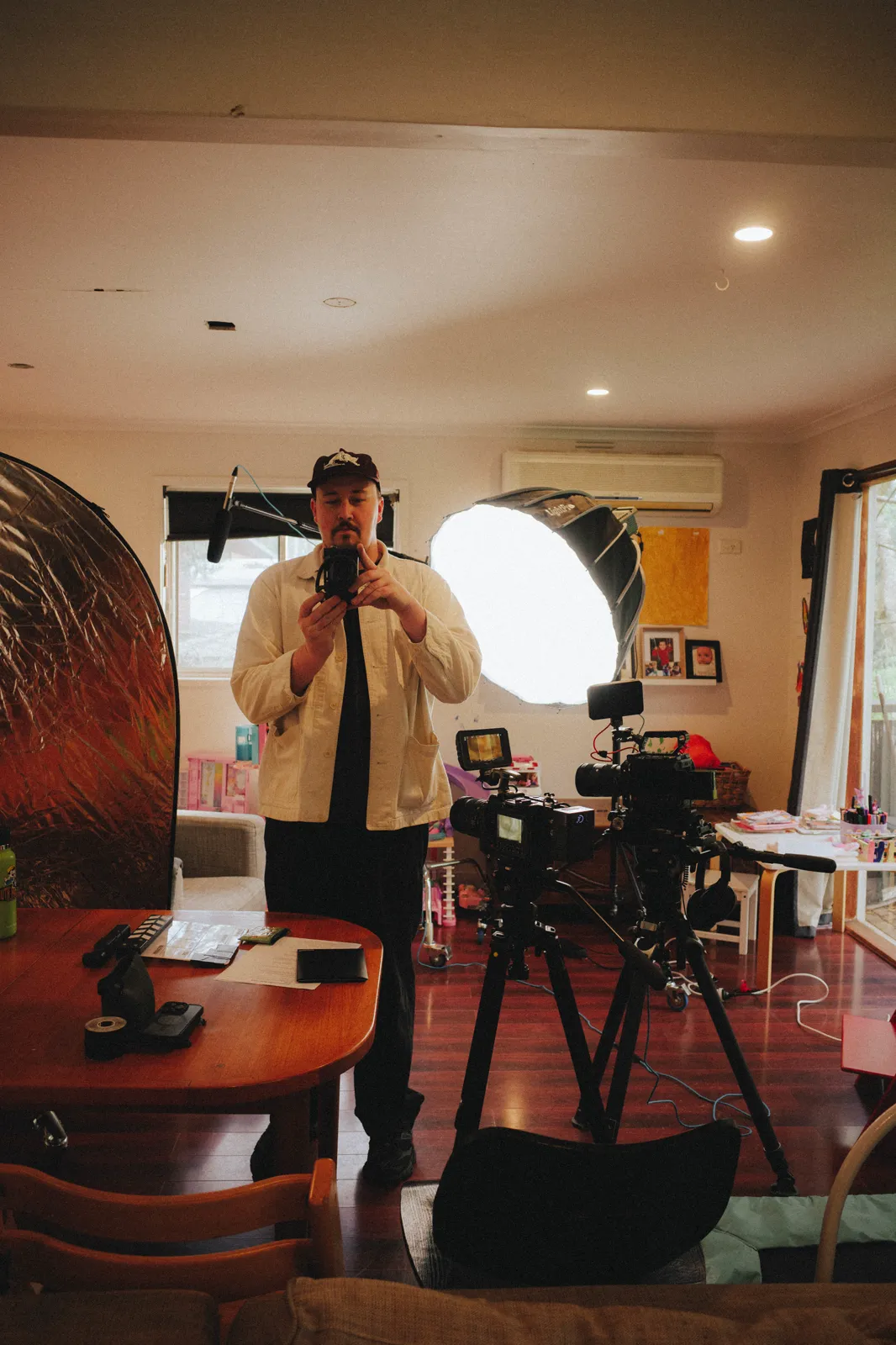
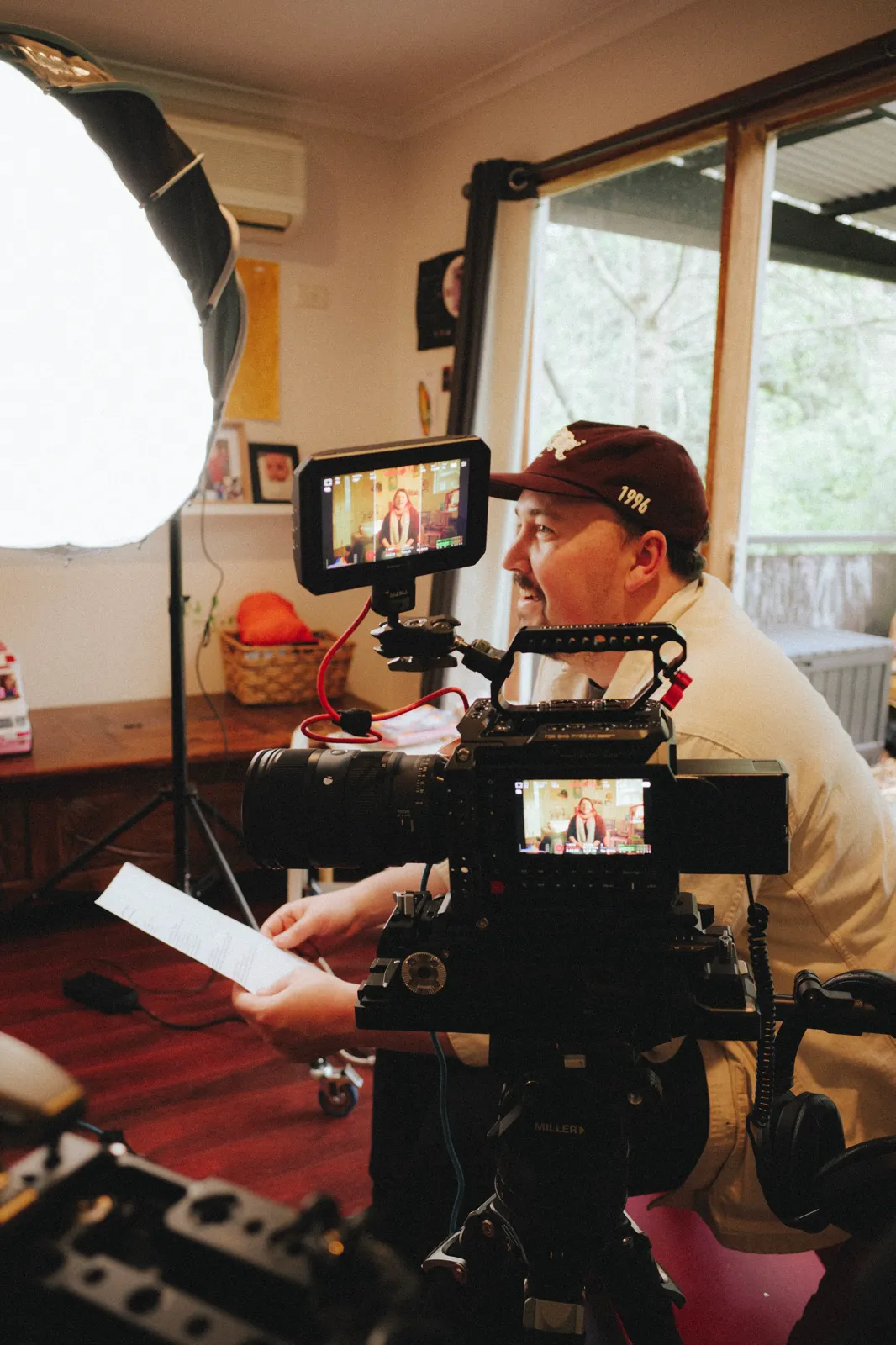
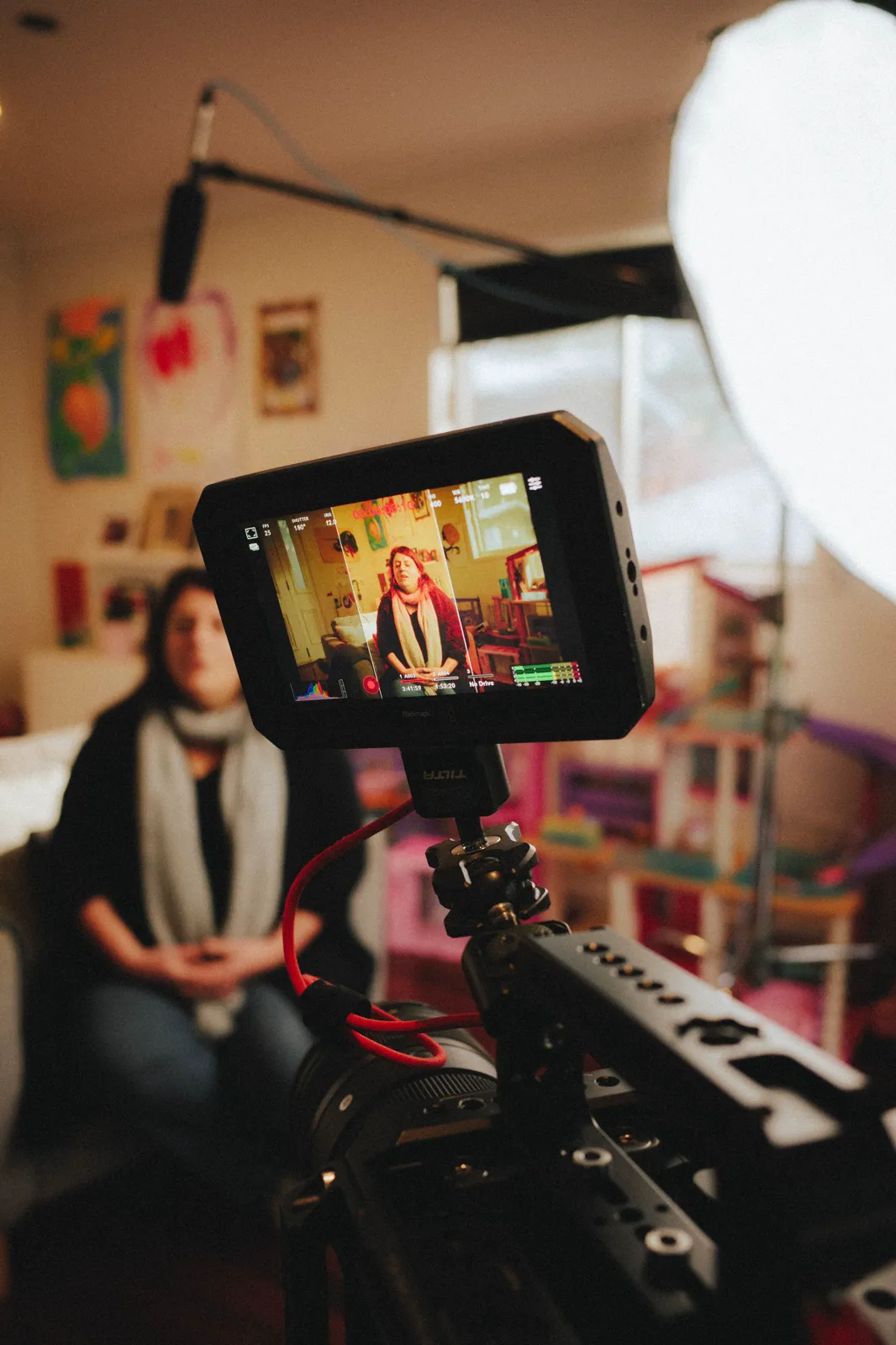
Ahead of build day we set up inside the house and sat down with Angelina, a single parent of three who had lived there for eleven years, and with St Ferrer director Chris Bertacco. Two cameras on every interview, a big soft source for the light, and a boom overhead, in the rooms that were about to change. Filming in the before space gave us the contrast the edit needed later, without having to say a word about it.
Letting the people carry it
We keep documentary interviews conversational rather than scripted. The aim is not a perfect answer to a question, it is the moment someone stops performing and just tells you what happened. Angelina gave us that early, and it set the tone for the whole film.
On the St Ferrer side, the directors and the team are the ones who pulled 40 partners and months of planning together. We wanted their voices in the film as people who cared about the outcome, not as a company explaining itself. That balance, a family's story told with the builder in it rather than a builder's story with a family in it, was the brief we held ourselves to.
Eleven and a half hours, more than 80 people
Build day is the opposite of an interview. At one point there were more than 50 people working outside and around 15 in the lounge room alone. Nothing waits for the camera, and nothing happens twice. A deck goes in once. A wall comes down once.
So we treated it like covering a live event. Video moved between the trades on the move, the wide picture from the drone, and the small human moments in between, while photography worked alongside to build a library St Ferrer could use well beyond the film. Daniel Burmeister, one of the St Ferrer directors, called it the most organised chaos he had ever seen, and that is exactly what we were trying to get on screen.
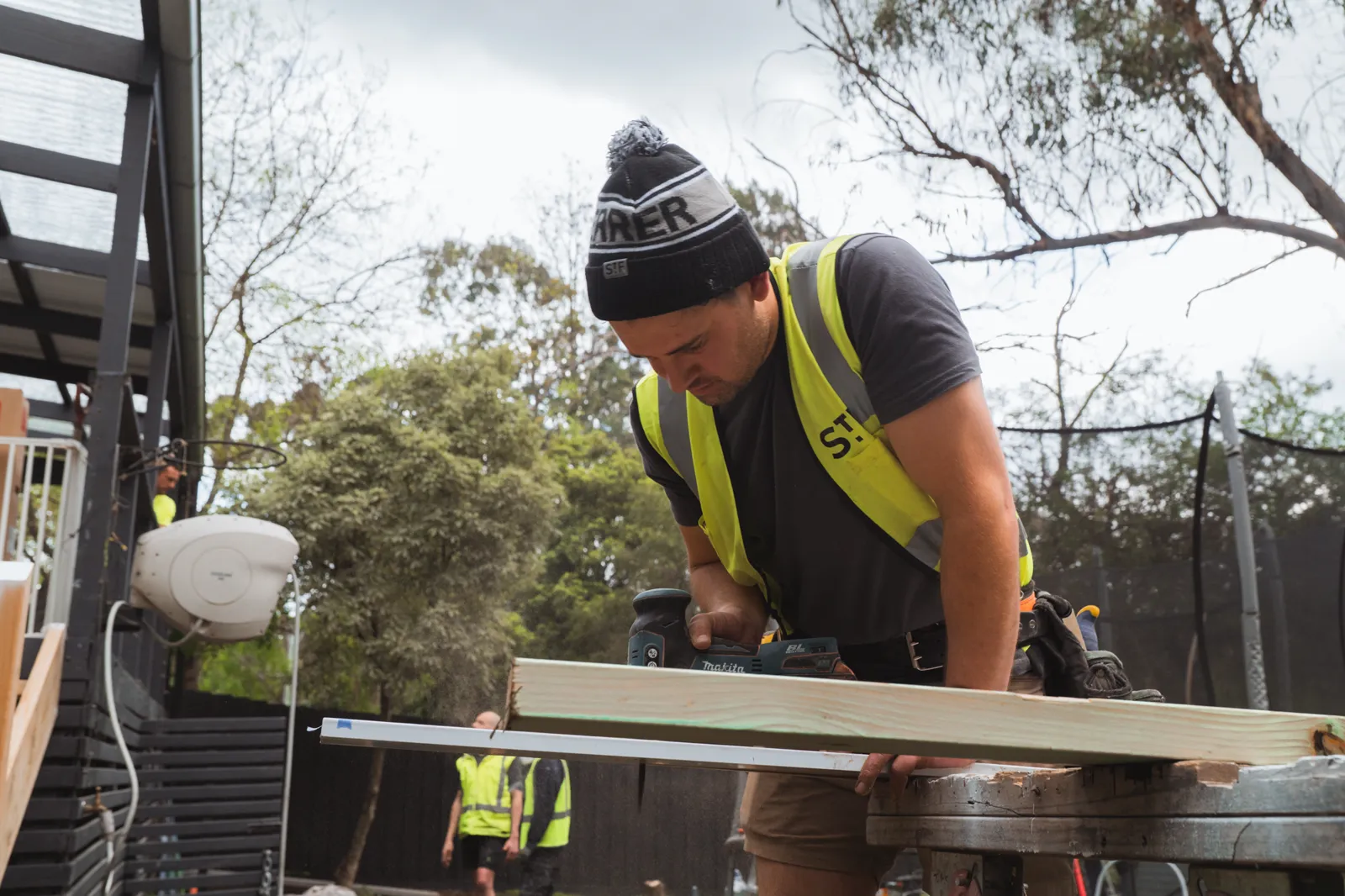
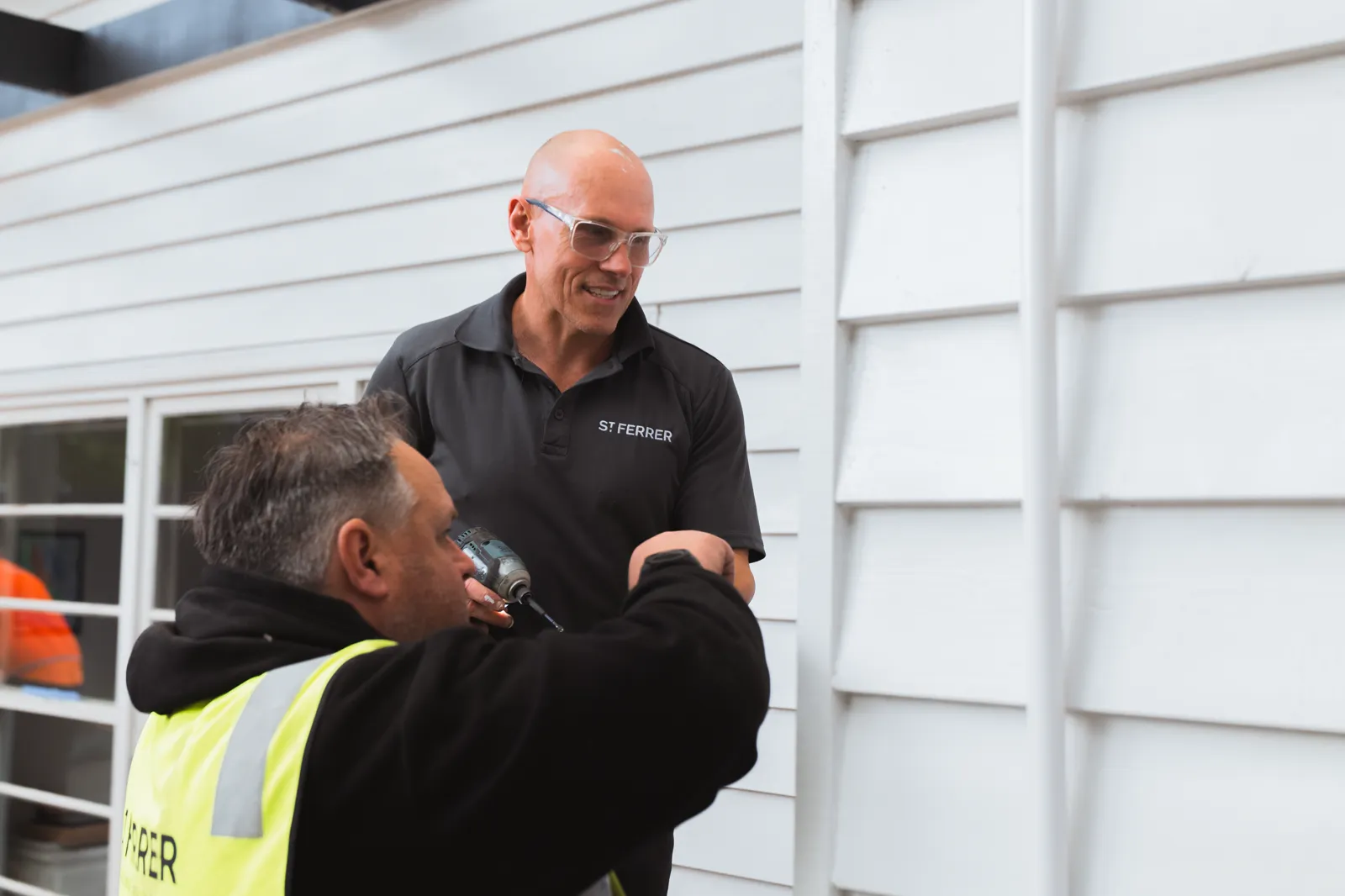
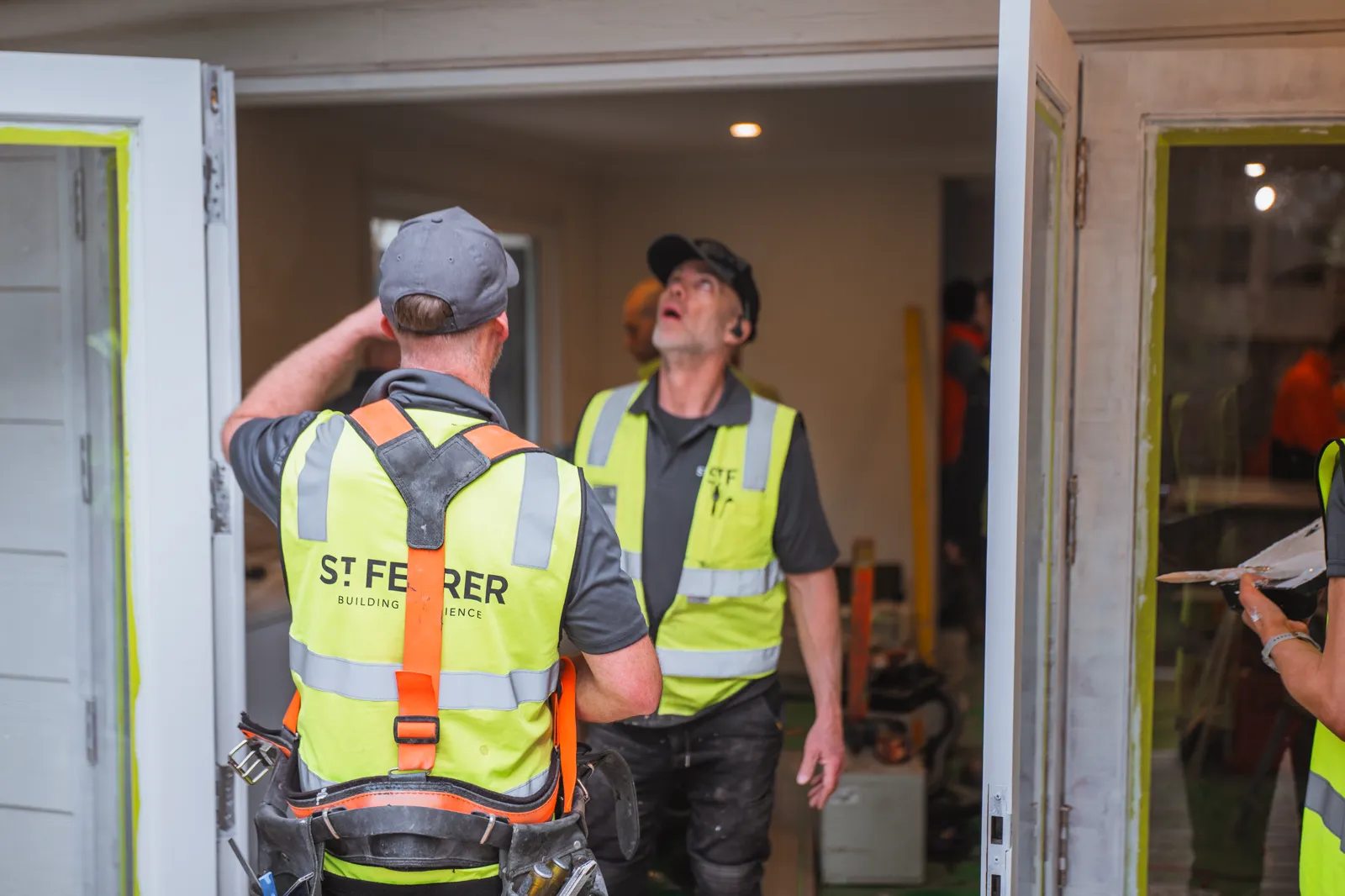
Shooting a build like this is mostly about knowing where to stand. Trades need room to work, so we pick our spots, stay out of the way, and let the action come through frame. The best photos of the day are the ones where nobody notices the camera: a joke on the scaffold, a director with a drill in hand, the whole crew cheering in a doorway.
The reveal
Everything in the film leads to one moment: the family coming home. There is no second take on a reveal, so we planned it more carefully than anything else on the day, with coverage on the family, on the crew lined up outside, and on the rooms they were about to walk into.
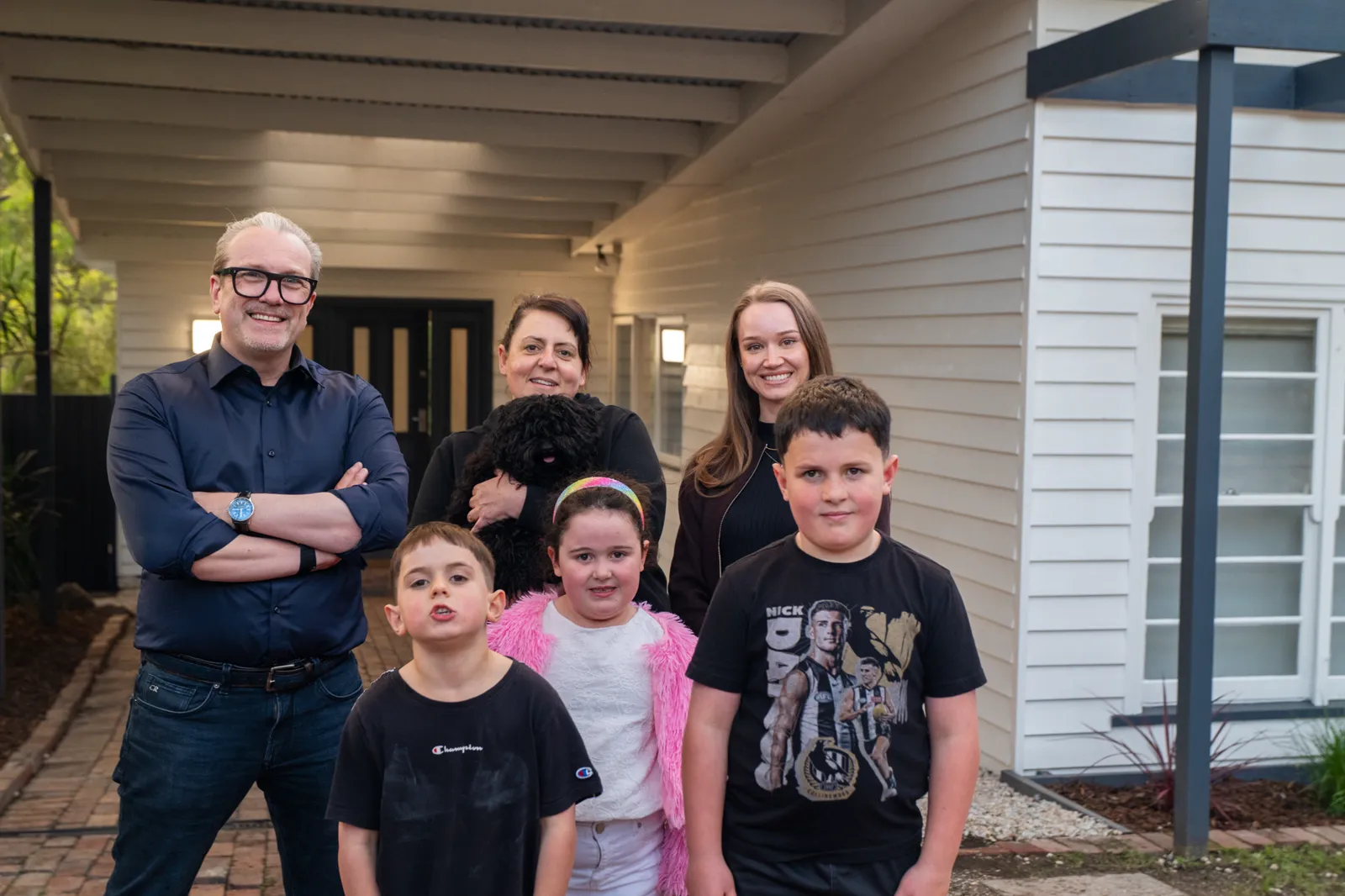
Then we came back for the after. With the house finished, photography captured the new spaces in full light, and a portrait of Angelina's family out the front of the home that closes the story. As she puts it in the article, the kids are safe, the dog is safe, and it is a real home now.
What we delivered
The main deliverable is the documentary, running just under six minutes and published on the St Ferrer channel alongside their own write-up of the project. Around it we cut trailers and shorter pieces focused on the team, the before and after, and the reveal, so the story could travel across social as well as sit on the website. The photography covers the before, the build and the after.
It is the kind of project we love being part of, and a good example of how we approach construction video: find the people, plan the moments that only happen once, and make the work look as good as it actually is. You can see the full set of stills and the film together in the case study.
Frequently asked questions
- What was the St Ferrer Impact Build?
- A one-day, whole-home renovation for a Melbourne family, led by St Ferrer Building Contractors with 40 Impact Partners and more than 80 trades, suppliers and volunteers on site. It covered 139 square metres of interior renovation and 822 square metres of landscaping.
- What did Lucky Boy produce for the project?
- The documentary, plus trailers and shorter cutdowns for social, and the photography across the interviews, the build day and the finished home.
- How do you film something that only happens once?
- Plan the moments that cannot be repeated, like the reveal, more carefully than anything else, then cover the rest of the day like a live event. Interviews happen beforehand so the story is in place before the build starts.
The case study
See the St Ferrer Impact Build
The documentary and the full set of stills, from the interviews to the finished home.